




10 key aspects of selecting sound-absorbing materials in automotive projects
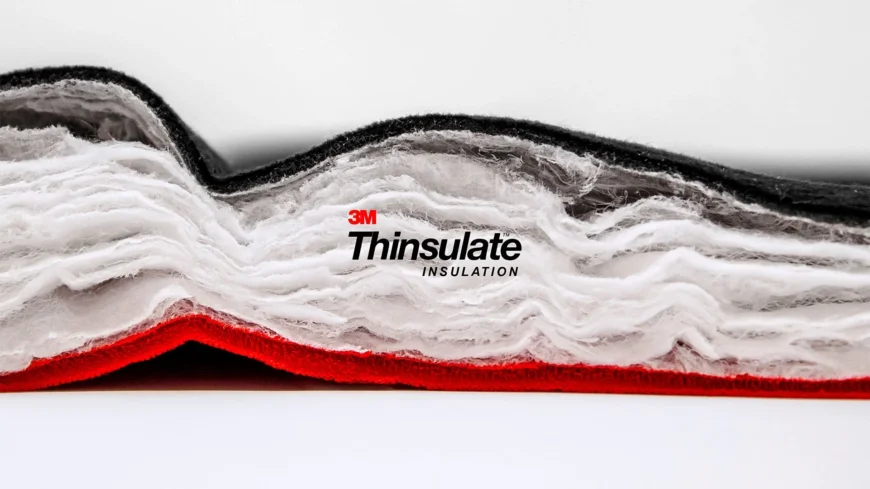
The selection of sound-absorbing materials in projects for the automotive sector is an engineering process that directly impacts the fulfilment of NVH requirements, vehicle weight, component durability, and compliance with quality and regulatory standards. In such projects, a material cannot be assessed solely on the basis of its declared acoustic properties – its behaviour in the application, processability, and full compliance with OEM requirements are of key importance.
Below are 10 key areas to consider when selecting soundproofing materials for automotive projects.
1. Identification of the noise source and transmission mechanism
In automotive projects, the process of selecting acoustic insulation materials always begins with correctly identifying the noise source and its transmission mechanism. This is a critical stage, as even a material with very good laboratory parameters will not deliver the expected results if it is applied to the wrong NVH problem.
In automotive practice, three main noise mechanisms are distinguished:
- Airborne noise – generated, amongst other things, by tyres, airflow or external components, penetrating into the vehicle interior through gaps, panels and trim elements. In such cases, absorbent and insulating materials operating in the mid-to-high frequency ranges are key, e.g. fibrous materials such as Thinsulate.
- Structural noise – arising from the vibration of structural components (e.g. sheet metal, frames, mountings) which radiate sound into the vehicle interior. In this case, absorption alone is insufficient, and an effective solution often requires vibration damping (CLD) or appropriate separation of components.
- Aerodynamic noise – associated with airflow around the vehicle, particularly significant at higher speeds and in modern vehicles with low-noise powertrains. In such applications, acoustic insulation materials must be selected for specific frequency bands that are most noticeable to the user.
The path of noise transmission is also of key importance – the same material may be effective in one place and completely ineffective in another if the method of installation, clamping, sealing and interaction with adjacent components are not taken into account.
Incorrect identification of the NVH mechanism often leads to:
- the use of absorbers where vibration damping is required,
- oversizing of materials ‘to be on the safe side’,
- an increase in the weight and cost of the component without improving its performance,
- the risk of failing to meet OEM requirements at the validation stage.
Therefore, in OEM, Tier 1 and Tier 2 projects, an analysis of the noise source and its transmission mechanism should always precede the selection of a specific material, regardless of whether it is a Thinsulate-type solution or an alternative.
2. Frequency range of the material
In applications, sound-absorbing materials must be selected for the specific frequency bands present in the given application, rather than on the basis of averaged acoustic declarations.
Thinsulate-type materials
Thinsulate-type materials, developed by 3M, among others, belong to the group of lightweight fibrous absorbers, which are highly effective in the mid and high frequency ranges.
In practice:
- the best performance is in the range of approx. 500–2000 Hz,
- with higher weight variants, the material also maintains good absorption in the lower part of the mid-frequency range,
- efficiency at low frequencies (<300 Hz) is limited, which is typical for lightweight absorbers without a mass layer.
As a result, Thinsulate performs very well in reducing:
- road noise penetrating into the interior,
- airborne noise,
- and resonance of interior components within the range perceptible to the user.
PET non-wovens (fibrous alternatives)
Polyester (PET) non-wovens, often used as an alternative to Thinsulate, also operate mainly at mid and high frequencies, however:
- their effectiveness depends heavily on thickness, compression and 3D shaping,
- in the lower frequency ranges they usually require greater thickness to achieve a comparable effect,
- they perform well in applications with more available space (e.g. floor systems, carpets).
In practice, PET is often chosen where:
- integration with the component is important,
- more installation space is available,
- NVH requirements are not extreme in the lower frequency bands.
Engineering foams (PU, melamine)
Engineering foams constitute another group of alternatives:
- they exhibit good absorption at mid and high frequencies,
- in the case of melamine foams, effectiveness in the upper frequency range is very high,
- efficiency at low frequencies remains limited without increasing thickness.
Their application is heavily dependent on:
- environmental conditions,
- flame retardancy and emission requirements,
- the method of integration with the component.
Mass and damping layers (MLV, CLD)
Mass and vibration-damping materials are not direct substitutes for Thinsulate, but often complement the NVH package:
- MLV (Mass Loaded Vinyl) operates mainly at low frequencies, blocking sound transmission at the cost of a significant increase in mass,
- CLD (constrained layer damping) reduces panel vibration, indirectly affecting noise emissions.
In practice, OEMs use these materials selectively, only where low-frequency reduction is critical.
3. Component mass and impact on vehicle balance
Mass reduction is one of the key requirements in OEM designs, particularly in e-mobility. Lightweight fibrous materials enable NVH requirements to be met whilst maintaining the component’s weight specifications.
In modern automotive designs, the weight of acoustic insulation components has a direct impact on vehicle weight balance, energy consumption and the fulfilment of design specifications, particularly in electric and hybrid vehicles. Materials such as 3M Thinsulate are designed as solutions offering high NVH performance with a relatively low mass per unit area, which is one of their key advantages in this field.
Typical Thinsulate variants used in the automotive sector range from approx. 200–600 g/m², depending on the required acoustic performance and thickness. By way of comparison:
- PET non-wovens used in floor and carpet systems often have weights of 600–1200 g/m², particularly in 3D moulded configurations,
- engineering foams (PU, melamine) offer good absorption, but in many applications require greater thickness, which translates into increased component weight,
- mass layers (MLV) used as acoustic barriers have weights in the range of 2–5 kg/m², which significantly affects the vehicle’s overall balance and limits their use in modern platforms.
Thanks to its favourable NVH/mass ratio, Thinsulate enables the required acoustic and thermal parameters to be achieved without the need for heavy mass layers. In practice, this allows:
- the mass of a single component to be reduced,
- the design specifications of the entire vehicle to be maintained,
- the need for mass compensation in other areas of the structure to be reduced.
From the perspective of OEMs and Tier 1 suppliers, this means greater design flexibility and the ability to optimise the NVH package without negatively impacting the vehicle’s mass balance. In many applications, it is precisely the low mass of Thinsulate-type materials that determines their selection over alternative solutions with similar acoustic performance.
4. Nominal thickness and behaviour under load
In Tier 1 and Tier 2 projects, it is essential to take into account the actual thickness of the material after installation, its compression, and its long-term dimensional stability over the vehicle’s lifecycle.
In automotive projects, the nominal thickness of acoustic insulation material is not a sufficient parameter for its correct selection. Equally important – and often more so – is the material’s behaviour after installation, i.e. its compression, thickness recovery and dimensional stability over time.
Materials such as 3M Thinsulate are available in several variants differing in grammage, thickness and structural stiffness, which directly affects their behaviour under load:
- Low-grammage variantsThese are characterised by a lower nominal thickness and high susceptibility to compression. They are used where installation space is very limited and the material is not subjected to strong pressure from structural components. They are mainly suitable as a supplementary NVH layer or thermal insulation in low-pressure zones.
- Medium-weight variantsMost commonly chosen in OEM projects as a compromise between acoustic performance, post-installation thickness and stability under load. The material retains good sound absorption even after partial compression, making it a versatile solution for doors, interior components and panels.
- High-grammage variantsDesigned for applications with high NVH requirements, where the material is subjected to greater pressure or must maintain effectiveness in confined spaces. The higher mass and fibrous structure result in less loss of acoustic performance after installation, at the cost of greater nominal thickness.
From a design perspective, it is crucial to consider the actual thickness after installation, rather than just the catalogue value. A material that meets the requirements in its free state may lose some of its effectiveness after installation if it has not been selected for the appropriate load conditions.
5. Environmental resistance throughout the component’s lifecycle
In automotive projects, insulation and acoustic materials must retain their properties not only under laboratory conditions, but above all in the actual operating environment of the vehicle. Materials such as Thinsulate are designed for stable performance across a wide range of environmental conditions, making them a safe choice for OEM applications.
A key feature is moisture resistance – the fibrous structure does not absorb water and does not lose its acoustic or thermal properties under conditions of high humidity or periodic condensation. This is particularly important in applications such as doors, wheel arches, the boot or the vehicle floor.
The material’s thermal stability is also significant. Thinsulate retains its insulating and mechanical properties across a wide temperature range, allowing it to be used both in interior zones and in areas exposed to elevated temperatures. As a result, the material does not deform, crumble or lose thickness during long-term use.
6. Processability and integration into the production process
In automotive projects, the material’s compatibility with mass production processes, such as contour cutting, lamination and forming, is crucial.
7. Edge sealing as a process requirement
In many OEM and Tier 1 projects, edge sealing of fibrous materials is a process requirement, ensuring the component’s geometric stability, eliminating fraying and ensuring consistent quality in mass production.
8. Prototyping and validation prior to SOP
Projects in the sound insulation segment require the ability to produce samples and prototype components for NVH validation, assembly testing and preparation of documentation prior to SOP.
9. Material alternatives and cost optimisation
Materials such as Thinsulate are often the benchmark in insulation and acoustic projects, but in practice they are not always the only or necessary solution. Depending on the application, NVH requirements, thermal conditions and cost constraints, it is possible to use alternative technologies that meet OEM requirements and provide a comparable performance.
The most commonly used alternatives include polyester (PET) non-wovens, including 3D mouldable materials, which are widely used in flooring systems, carpets and interior components. They offer good sound absorption, dimensional stability and a favourable mass and environmental profile, particularly in high-volume projects.
In selected applications, engineering foams (e.g. melamine or polyurethane) are also used, which provide high acoustic performance in specific frequency ranges and good thermal insulation. Their use, however, is heavily dependent on environmental conditions, flammability requirements and the method of integration with the component.
NVH packages may also be supplemented by mass or vibration-damping layers (e.g. CLD, MLV), which do not replace fibrous materials but perform a different function within the insulation system – they reduce vibrations or block sound transmission in specific areas.
10. Compliance with OEM standards and flammability requirements
In projects carried out for OEMs and Tier 1 and Tier 2 suppliers, compliance of sound-deadening materials with standards is a prerequisite, regardless of their acoustic or thermal performance. Materials such as Thinsulate and their alternatives must meet both industry standards and vehicle manufacturers’ internal specifications, covering aspects such as flammability, emissions, durability and the reproducibility of parameters in mass production.
Flammability standards, such as FMVSS 302 / ISO 3795, which apply to vehicle interior components, are of key importance, as are requirements regarding odour and emissions of volatile organic compounds (e.g. VDA 270, VDA 278, ISO 12219). Equally important is the stability of material properties throughout the component’s life cycle, verified through environmental and ageing tests in accordance with OEM requirements.
Summary
In OEM, Tier 1 and Tier 2 projects, the selection of sound-deadening materials is a critical element of the APQP process. The right material decisions at the R&D stage help to mitigate quality risks, shorten implementation times and ensure NVH stability throughout the vehicle’s life cycle.
Download the catalogue
Do you want to get more information about our company, products or services? Just provide your e-mail address and we will send the cvgs company catalog to it!
free consultation

