




9 reasons why AFT components fail – the most common practical errors
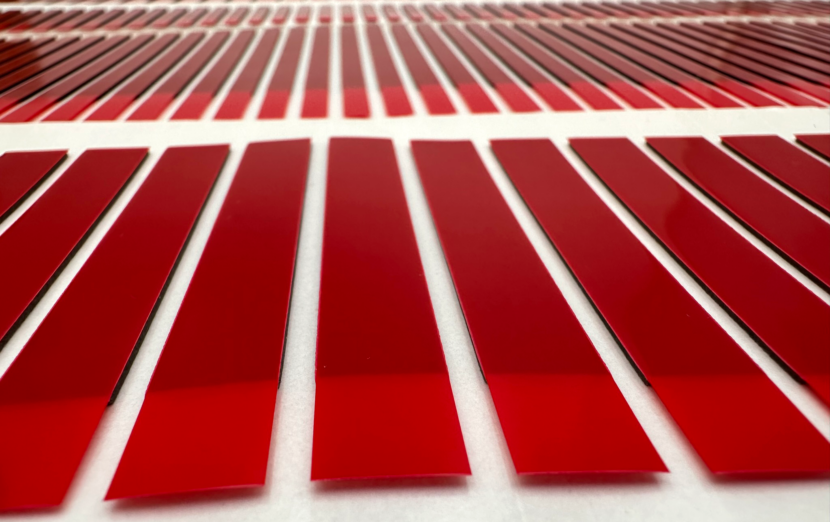
Analysis of application errors and process recommendations
Introduction
AFT (Acrylic Foam Tape) tapes have for many years been the standard in the assembly of components where aesthetics, vibration resistance and joint durability are required. They are used in the automotive industry, in metal structures, in electronics and in the manufacture of industrial components.
Despite the high technical specifications of the tapes themselves, a problem arises in practice: some parts lose their adhesion over time, and the joints come apart.
In the vast majority of cases, the cause lies not in the material, but in application errors.
Based on CVGS’s internal guidelines and experience from production audits, we have prepared an analysis of the most common errors and how to eliminate them.
1. Inadequate surface preparation
Surface cleanliness is an absolute prerequisite for a successful bonding process. Even a thin layer of grease, dust or residues of a release agent creates a barrier that prevents actual contact between the adhesive and the substrate.
Before application, chemical cleaning must always be carried out – most commonly using IPA (isopropanol) or acetone. The surface must be completely dry, free from any traces of liquid, and must not be touched after degreasing. For difficult materials (e.g. plastics with surface-modifying additives), additional mechanical cleaning or plasma activation is recommended.
2. Insufficient surface energy of the material
Not every substrate allows the adhesive to function properly. Materials such as PP, PE, PTFE or powder-coated surfaces have low surface energy, causing the adhesive to ‘slide’ over their structure rather than penetrate it.
In such cases, it is necessary to use a primer – an adhesion promoter that increases surface energy and enables the formation of durable bonds. The primer should be applied in a thin, even layer and left until the solvent has completely evaporated (usually 5–10 minutes). In mass production, it is good practice to periodically check the effectiveness of surface preparation using testers (so-called dyne tests).
3. Moisture and condensation
Acrylic adhesives do not tolerate the presence of moisture at the time of application. Even a thin layer of condensation can ruin the entire process – water molecules form a film between the adhesive and the surface, which prevents adhesive contact.
Before bonding, components must always be acclimatised to ambient temperature (approx. 20–25°C). If a component has previously been stored in a cold store or in high-humidity conditions, it must be warmed up and dried. In facilities where there are temperature differences between the production hall and the warehouse, it is advisable to monitor the dew point and avoid application on chilled surfaces.
4. Insufficient or uneven pressure
The tape application process requires sufficient contact pressure to ensure the adhesive can fully conform to the surface microstructure and remove trapped air. The minimum contact pressure is 10–15 N/cm², which corresponds to approx. 100–276 kPa, with the pressure maintained for several seconds.
In practice, pressure rollers or mechanical press systems are most commonly used. Pressure applied by the operator applying the self-adhesive component will also usually suffice.
5. Errors when removing the liner
Although it may seem like a minor detail, the method of removing the liner is important. The liner should be peeled off at a 180° angle, smoothly and without jerking. Peeling it off too abruptly causes the adhesive to tear or introduces pre-stresses into the tape’s structure.
In manual processes, the liner should be removed immediately before application to avoid contaminating the adhesive.
6. Contamination of the adhesive surface
Touching the adhesive with a finger introduces grease and dust onto its surface. Just one such spot is enough for the bond to start peeling away from the edges.
Staff should use nitrile gloves and avoid contact with the adhesive layer. Additionally, it is recommended to restrict airflow in the application area to minimise dust settling.
7. Exceeded shelf life of the material
AFT tapes have a limited storage life – usually 6 months from the date of delivery. After this time, the adhesive loses its effectiveness and the foam may undergo partial degradation.
It is important to adhere to storage conditions (20–25°C, humidity < 60%) and to rotate stock according to the FIFO principle. In many cases, the problem of ‘non-functional components’ has resulted from the use of tape from an expired batch.
8. Insufficient curing time
An adhesive bond requires time to reach full strength. For AFT tapes, maximum adhesion develops after approx. 72 hours at room temperature.
During this period, the bonds stabilise and the adhesive molecules diffuse into the surface structure. If the joint is subjected to load prematurely (e.g. during final assembly), micro-cracks may form in the adhesive zone.
9. Incorrect joint design
From a mechanical point of view, AFT tapes are designed to withstand shear and compressive forces, but they do not cope well with peel forces.
If a component is designed in a way that generates a peel moment at the edge, the bond will be unstable. In such cases, the assembly layout should be changed or the bonding area increased.
One should also avoid bonding on curved surfaces and stretching the tape during application – after a while, the material returns to its original shape, ‘pulling’ the component.
Summary
In over 90% of cases, adhesion problems with AFT components result from procedural errors rather than the properties of the tape itself.
The factors with the greatest impact on the quality of the bond are:
- surface cleanliness and energy,
- temperature and humidity control,
- correct pressure and application angle,
- curing time,
- and appropriate bond design.
Adhering to these principles allows for bonds with stable strength parameters, resistant to vibration, moisture and temperature changes.
When applied correctly, AFT tape is not merely an adhesive – it is a structural element that successfully replaces traditional fastenings and enables the creation of modern, lightweight and durable solutions.
Download the catalogue
Do you want to get more information about our company, products or services? Just provide your e-mail address and we will send the cvgs company catalog to it!
free consultation

